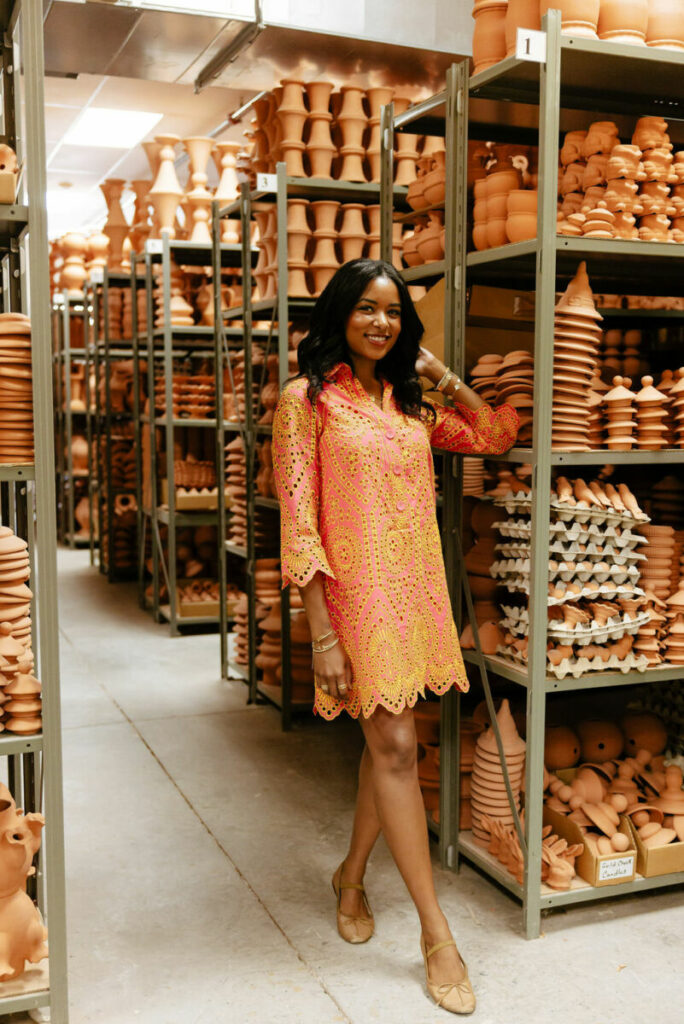
I Went to Aurora, New York as a MacKenzie-Childs Fan. I Left as Something More.
Before I tell you about the how Mackenzie-Childs ceramics go through over a dozen stages and touch even more hands before it’s ever completed, I have to address what a lot of you have probably already seen.
If you’ve been on the internet recently, you likely came across the documentary about Victoria and Richard MacKenzie-Childs living on the Yankee Ferry— the last surviving Ellis Island ferryboat, docked in Staten Island. It’s a beautiful, melancholy little film. And when it went viral, so did the outrage: How could they let the founders of this iconic brand end up living on a boat? How could a company do that to the people who built it?
I understand that reaction. I really do. But I want to offer some context, because context matters— especially when we’re talking about a woman’s legacy.
MacKenzie-Childs didn’t abandon Victoria. The company went bankrupt. It was 2000, and without intervention, it was going to close entirely.. taking with it dozens of jobs in a veryyy small upstate New York town that had grown to depend on it. Pleasant Rowland, the visionary founder of American Girl, stepped in and purchased it. She didn’t gut it, she didn’t strip it, she saved it because she loved the town of Aurora and wanted to see it thrive.
Victoria herself said in that same documentary: “We’ve loved every year. Never been disappointed in it.” The boat wasn’t a consolation prize— it was a choice. An unconventional, artist-brained, only-these-two-people kinda choice. And that was her right!!
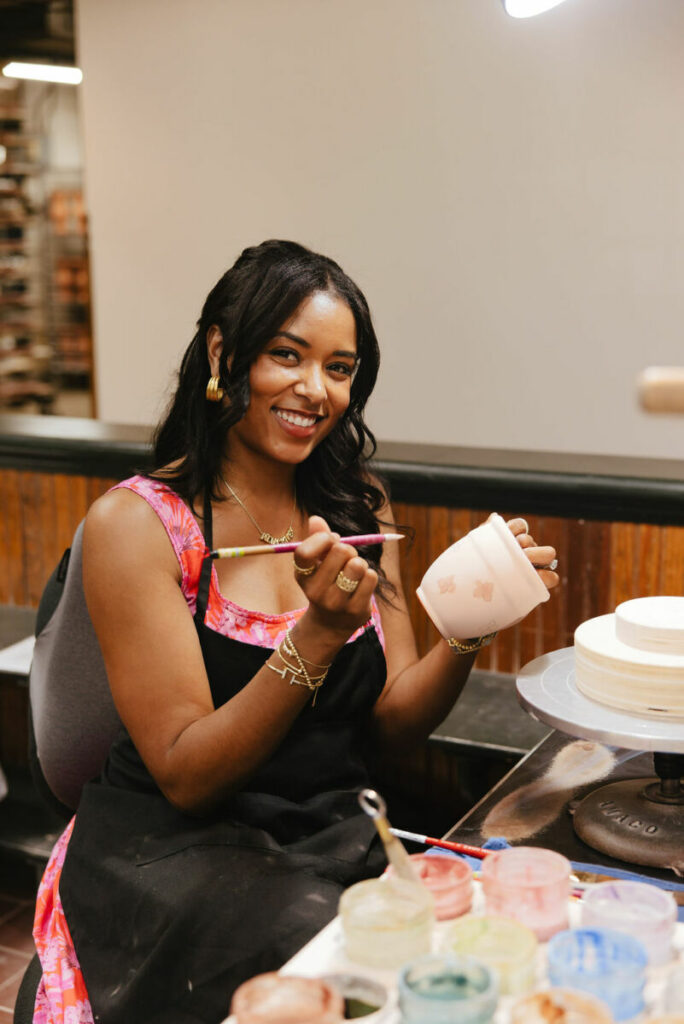
I talk more about the “cost of a woman selling her name” over on The PINCK Diary, but what strikes me, and what I couldn’t stop thinking about while I was standing in that Aurora workshop watching a woman carefully place a brushstroke on a piece of pottery, is that the spirit Victoria and Richard poured into this brand never left. It’s still there! It’s in the hands of the people who learned under them and never walked away. It’s in the checkers that are constantly being reimagined. It’s in the whimsy that lurks behind every curvy line or pastel color. And it’s in the imperfections of something beautiful being made by human hands.
I went to Aurora as a fan, but I left as a believer!
Why MacKenzie-Childs Is Worth Every Penny (I Went to the Source to Find Out)
I’ve been sharing Mackenzie-Childs products with y’all for years now, and one of the comments I often get is about how expensive their pieces are. And it’s true! I could never deny that nearly every piece they create is an investment. But now, I know why!
I recently had the opportunity to visit Aurora, New York, the small Finger Lakes village where MacKenzie-Childs has been made since 1983. I went as an ambassador and a longtime fan, but I came back as someone who genuinely cannot look at these pieces the same way again. Because once you see how they’re made, the price stops being a question.
It’s Actually Handmade. Like, Actually.
I think a lot of us use the word “handmade” loosely. We’ve been conditioned to. Brands slap it on packaging and we half-believe it and move on.
MacKenzie-Childs is the real thing.
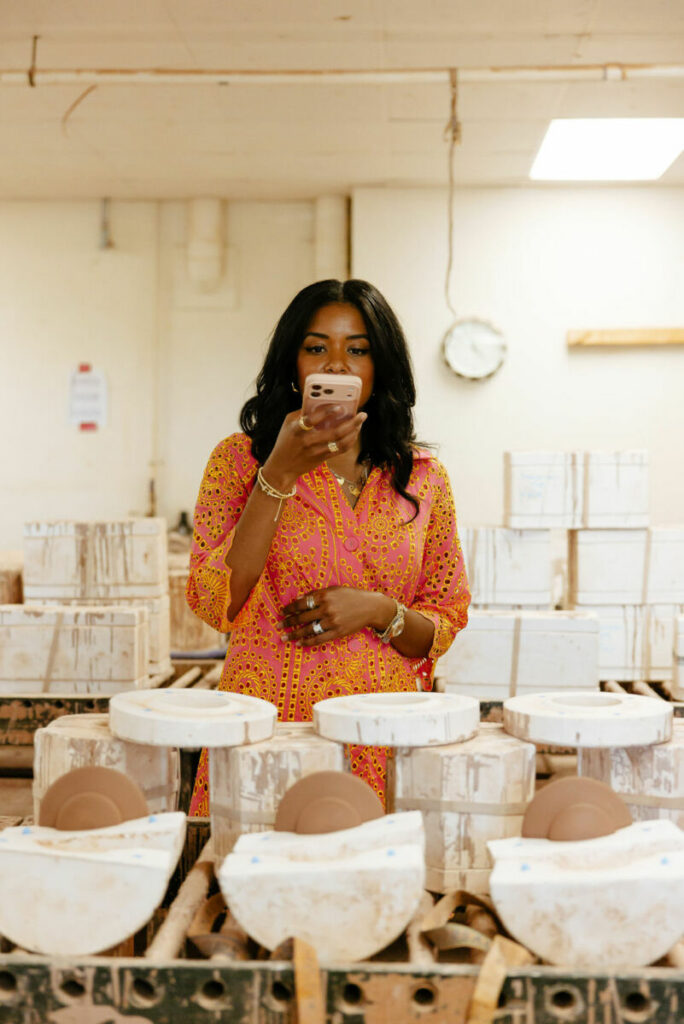
Inside their Aurora workshop, every single piece moves through human hands. Every check, every flower, every beaded detail is deliberate… and no two are the same. There are no machines replicating the pattern. There is a person— a skilled, experienced, deliberate person— painting it. Some of those people have been doing it for decades. Several of the artisans working in that studio today started under Victoria and Richard MacKenzie-Childs themselves. They stayed through every ownership transition. They stayed because the craft didn’t change.
That’s the part that got me.
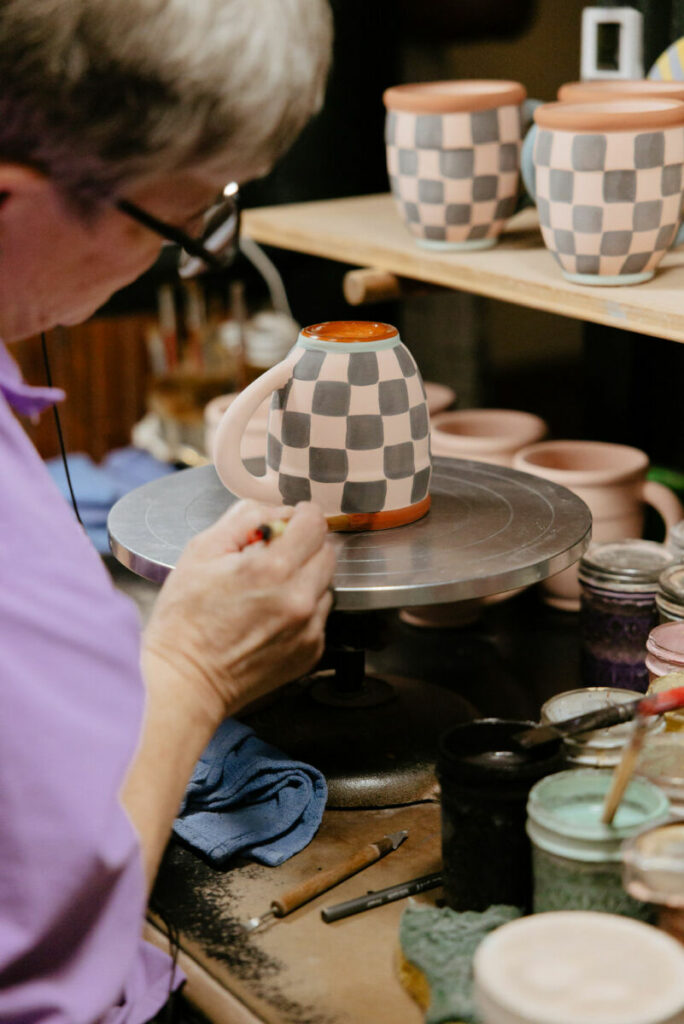
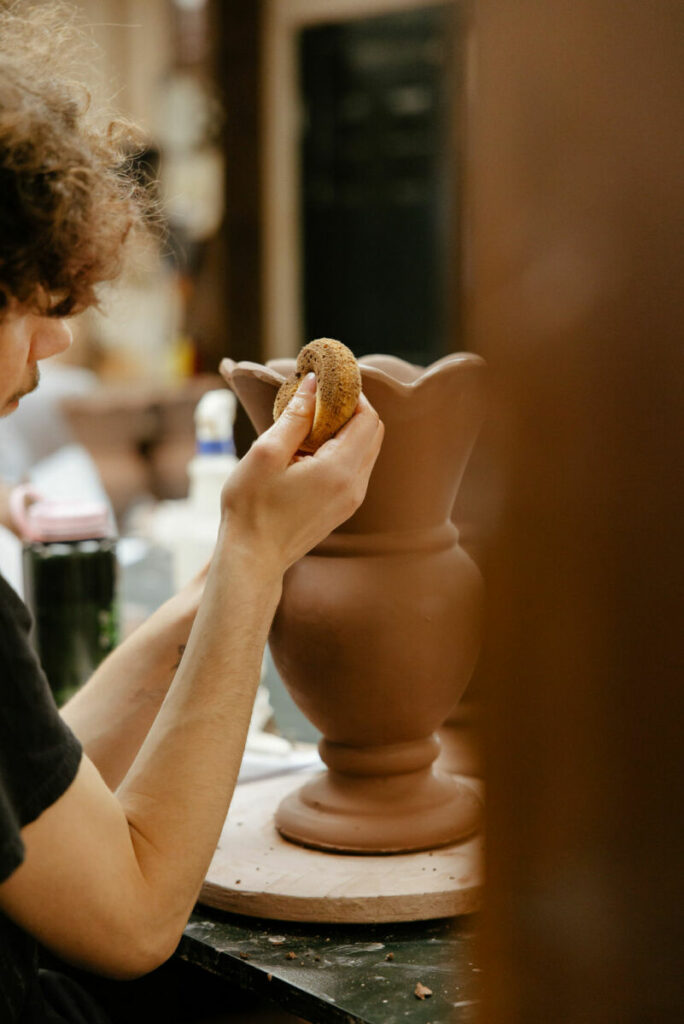
When a brand changes hands —especially three or four times— the instinct is to assume the soul got sold too. That the people who cared left, and the people who stayed are just collecting a paycheck. But that is not what I saw in Aurora. What I saw were craftspeople who are genuinely proud of what they make.When you buy a MacKenzie-Childs piece you are buying someone’s skill, their time, and their trained eye deciding that this checker is placed exactly right. It’s something they’re so proud of they stamp their initials on the back of pieces they make as ownership of the craft. That matters and it’s reflected in the price.
But I don’t want to fool you. Not every single Mackenzie-Childs product is created by hand in their workshop. Over the years, the brand has extended far past ceramics and some materials are simply unable to be made in the US. Take their enamel for instance; enamel hasn’t been produced in the US for years and so things like their tea kettle or pitcher are made in factories abroad. But each piece starts off as hand-painted designs before it’s printed and applied by hand. And then there are the products made of Capiz, or their towels, or many other materials they’ve dreamt up– their team sources those items from all over the world, often times working with small local artisans to create items comparable to what’s being made in Aurora. Craftsmanship and artistry are the foundation of the brand and is reflected in every single product they produce– no matter where that takes place.
These Pieces Are Designed to Be Passed Down
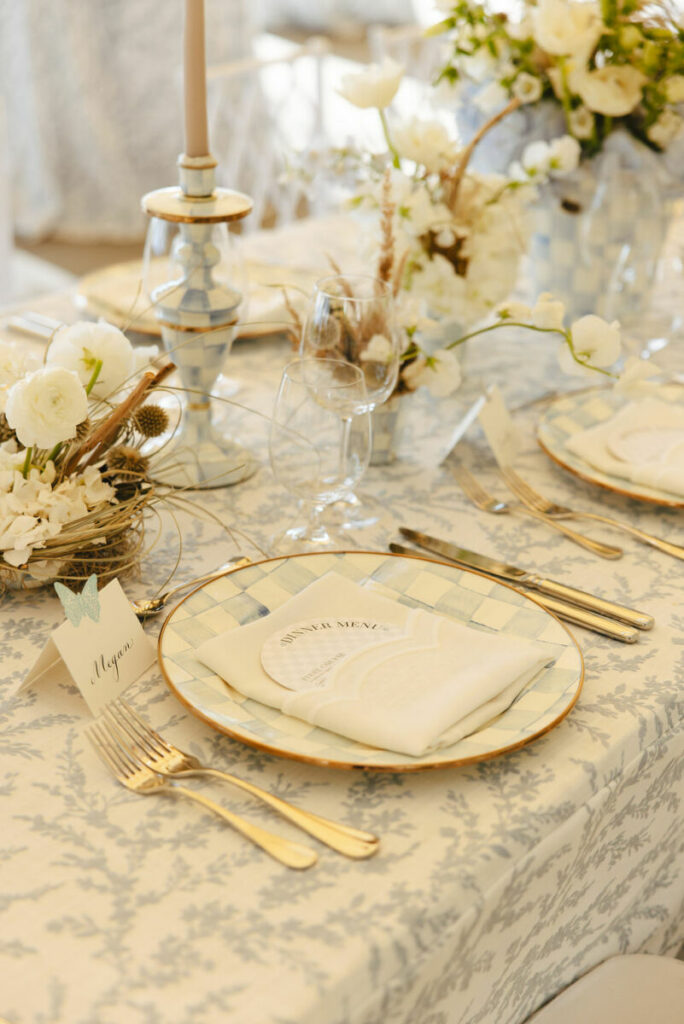
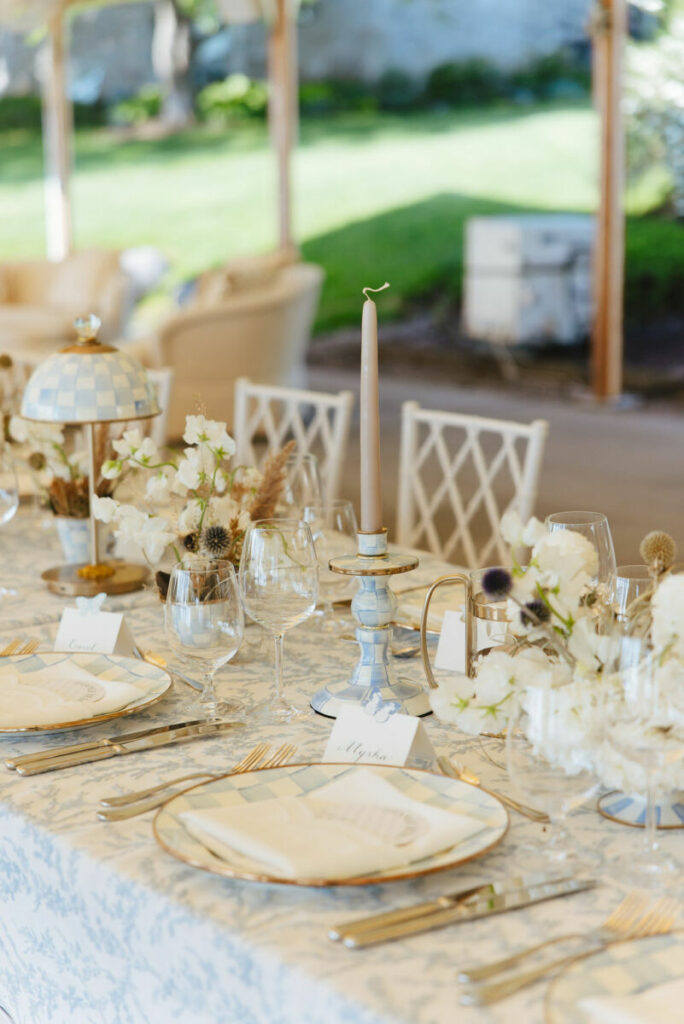
I have MacKenzie-Childs pieces in Courtly Check, Sterling Check, Rosy Check and Mocha Check. I have pieces dedicated to Easter and ornaments for Christmas! But I didn’t buy them just for décor; I bought them as heirlooms.
That’s how I think about this brand now… not as a splurge, but as an investment in beautiful things that will probably outlast me. MacKenzie-Childs pieces are things like enamel on cast iron, hand-thrown ceramics, and solid furniture built to live in a home for generations. They are not trendy pieces you purchase one year then toss the next. They are the kind of objects that become the backdrop of your kid’s most precious memories— the kind that they’ll ask to pack with them when it’s time for them to build a home of their own.
If you’re someone who thinks carefully about what you bring into your home, who cares about intention over impulse, and who believes there should be a little whimsy in your every day life, then MacKenzie-Childs belongs in your space.
Whimsy Has a Address— and It’s in Aurora
There’s a working farm on the MacKenzie-Childs property. And the moment you see it, something clicks.
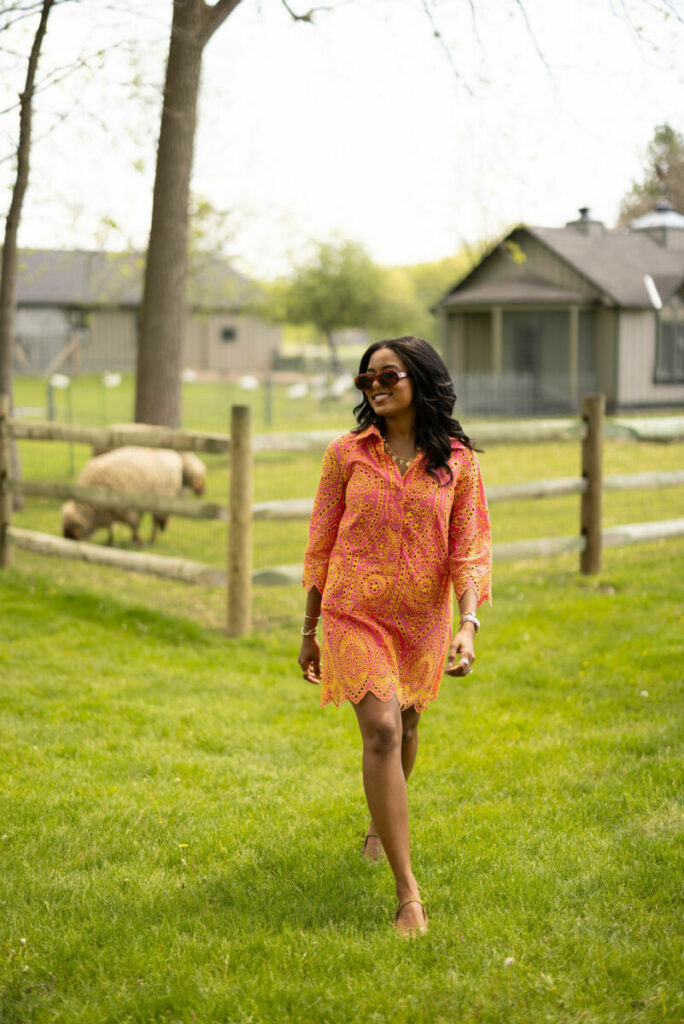
You’re standing on a hill above Cayuga Lake, watching sheep graze while a peacock— yes, an actual peacock— spreads his wings. The water is glittering in the distance and the hills roll in every direction in a way that makes you feel like you’ve been dropped inside a painting. And suddenly you realize exactly where the whimsy comes from. It came from this!
MacKenzie-Childs isn’t whimsical because someone in a boardroom decided whimsy was a good brand strategy. It’s whimsical because the people who built it woke up every morning looking at this— and decided their job was simply to respond to it. To take all of that natural beauty and enhance it by adding some color, adding some patterns, and a few squiggly lines where nature left a straight one.
That’s also, I think, why everything is made by hand.
Because nature doesn’t make two things exactly the same. No two leaves, no two feathers, no two anything. And there’s something in that that makes the slight variation between one hand-painted checker and the next feel less like imperfection and more like proof that a person made this. Proof that it’s one of a kind. Proof that, like everything beautiful in nature, it will never be exactly replicated.
That’s not a flaw in the design. That is the design.
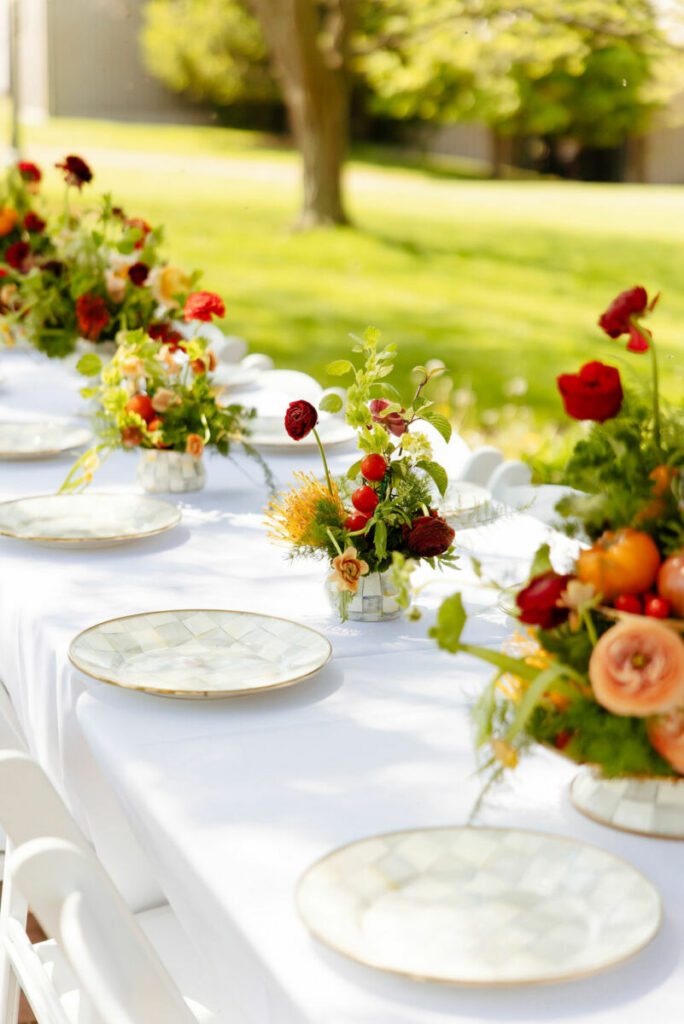
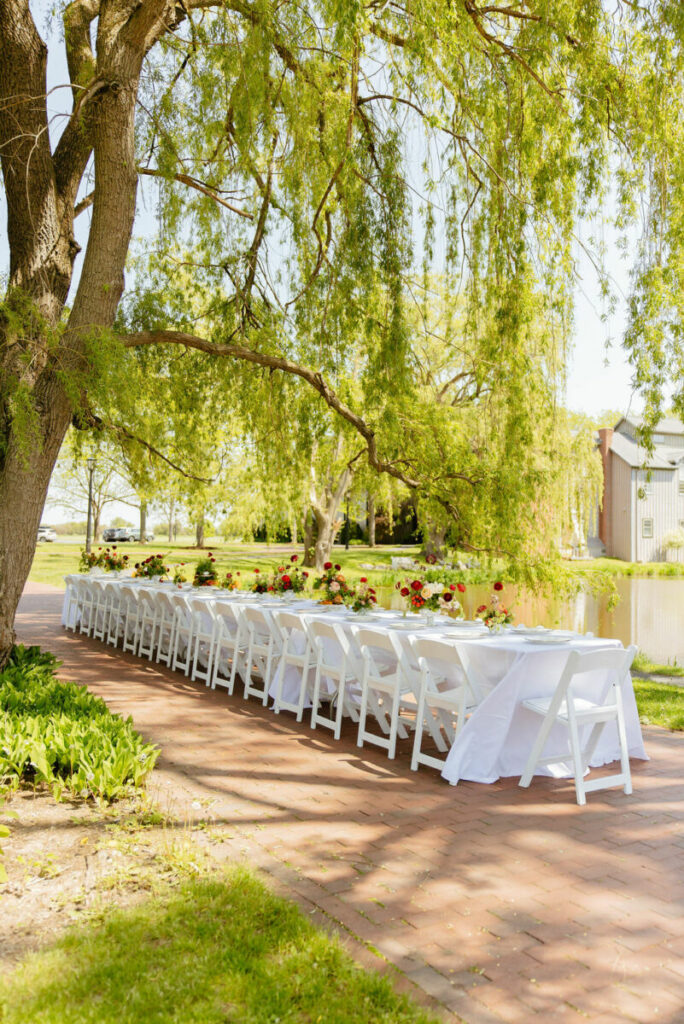
The Flagship Store Is Open to the Public— and You Should Go
If you’ve ever shopped MacKenzie-Childs online, you know the feeling. You open the site, you start scrolling, and somewhere between the third page of enamelware and the seventh pattern variation you just… feel a little overwhelmed. Not because you don’t love it. Because there’s so much of it and without context, it’s hard to know where to start.
It’s happened to me plenty of times!
But walking into the Aurora flagship store gave me an appreciation of products I’d scroll over in the past.
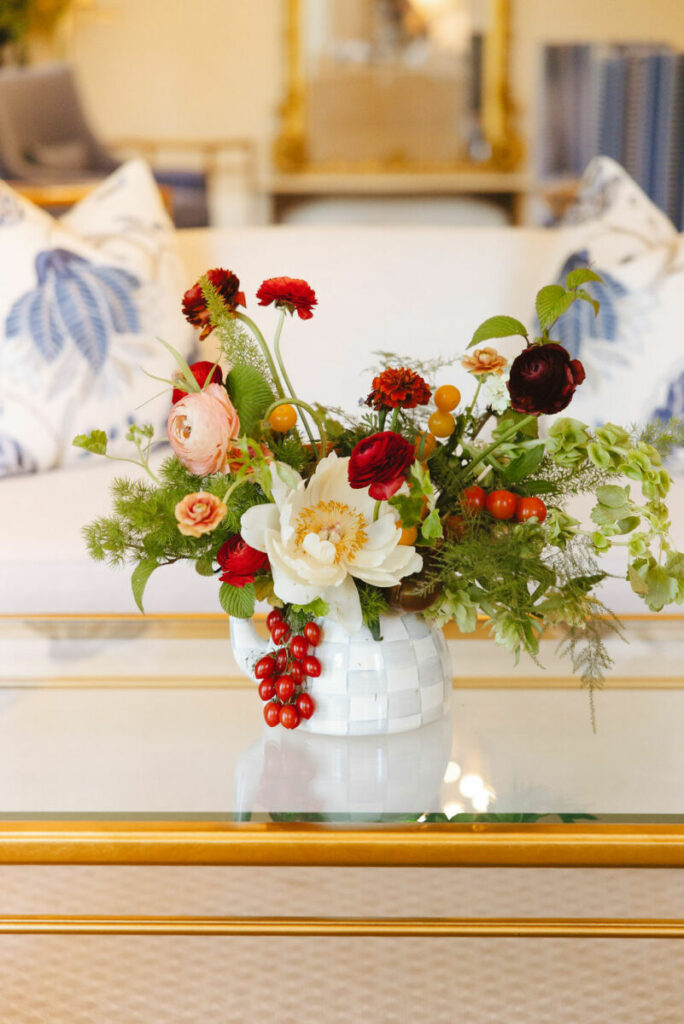
Seeing t full collection, styled the way the brand actually intends it— layered, maximalist, somehow completely cohesive— changes everything. So many products that I thought wasn’t for me looked completely different when I saw it living in a room instead of floating on a white product background.
Context is everything with this brand. And the flagship gives you that.
It’s located right in Aurora and it’s open to the public— meaning you don’t need a press trip or an ambassador invitation to have this experience. You can just go!! And if you’ve been on the fence about a purchase, or if you’ve ever felt overwhelmed shopping the site, I genuinely think an hour in that store will do more for your clarity than any amount of scrolling ever could.
You’ll leave knowing exactly what you want. And probably a few things you didn’t know you needed.
So Is It Worth It?
Yes. Here’s my honest answer:
If you’re buying MacKenzie-Childs expecting it to be cheap, you’re thinking about it wrong. But if you’re buying it as something you’ll use every day, love for years, and eventually hand to someone who will love it too— it’s one of the best investments you can make in your home.
I use to save up for pieces. Now I think of them the way I think about a great piece of jewelry or a well-made bag: you pay once, you pay well, and it stays with you.
This post is in partnership with MacKenzie-Childs. All opinions, as always, are entirely my own.